 STRATEGIC HOSPITALITY & DESTINATION ADVISORY
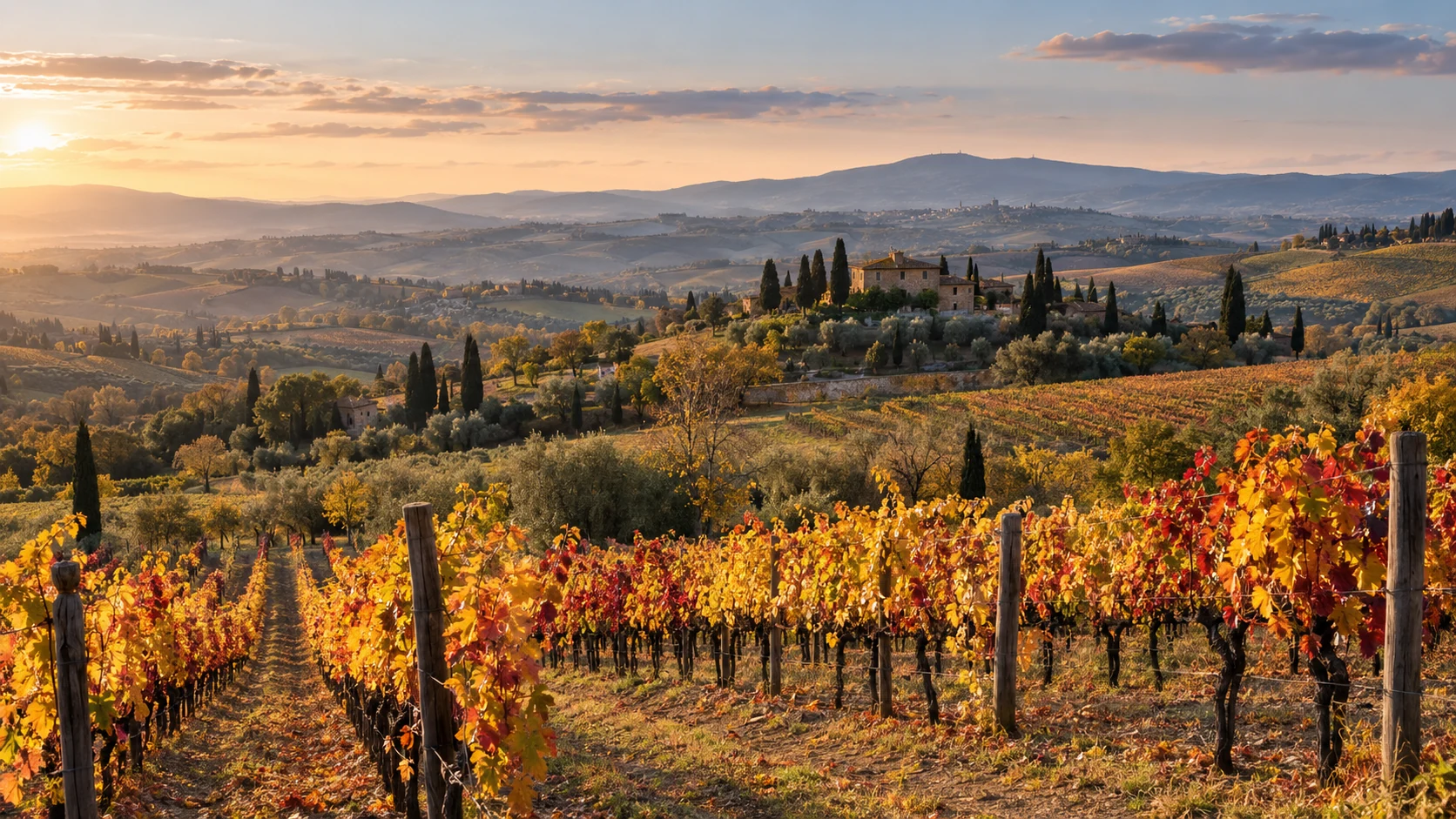
In Tuscany, the end of the grape harvest does not mean the end of the story. As vineyard leaves gradually fall and the days grow shorter, the landscape becomes easier to read: the shape of the fields, the distance between villages, and the work connecting vineyards, olive groves and the kitchen come into focus. It is a compelling time for travellers who want more than a sequence of tastings.
Across Chianti and the Montalbano countryside, autumn marks the transition from gathering grapes to harvesting olives. This is not a performance arranged for visitors but a working agricultural calendar, shaped by weather and the needs of each estate. A thoughtfully planned visit respects that rhythm: it is arranged in advance, gives time to the people who cultivate the land, and welcomes questions that reach beyond the wine itself.
Further south, the Val d'Orcia offers a complementary perspective. Its UNESCO-listed cultural landscape speaks to a centuries-old relationship between cultivation, settlement and the contours of the land. Seeing it in a quieter season encourages visitors to look beyond the familiar postcard: a row of vines, a gravel road or a farmhouse is not merely scenery, but part of a living agricultural and human landscape.
The word 'organic' also deserves careful attention. For wine in the European Union, it is not simply a vague promise of naturalness: it refers to specific production rules and controls. Curious travellers can learn to read certification information, distinguish documented practices from marketing claims, and ask how a producer approaches everyday decisions in the vineyard and cellar. Transparency is part of a meaningful encounter.
Luxury in this setting does not necessarily require a crowded itinerary. It may take the form of an unhurried conversation, a lunch shaped by what is in season, a walk through cultivated land, or time to notice the changing light. Travelling after the harvest allows Tuscany to reveal itself as it is: not only a destination to admire, but a place to understand.