 STRATEGIC HOSPITALITY & DESTINATION ADVISORY
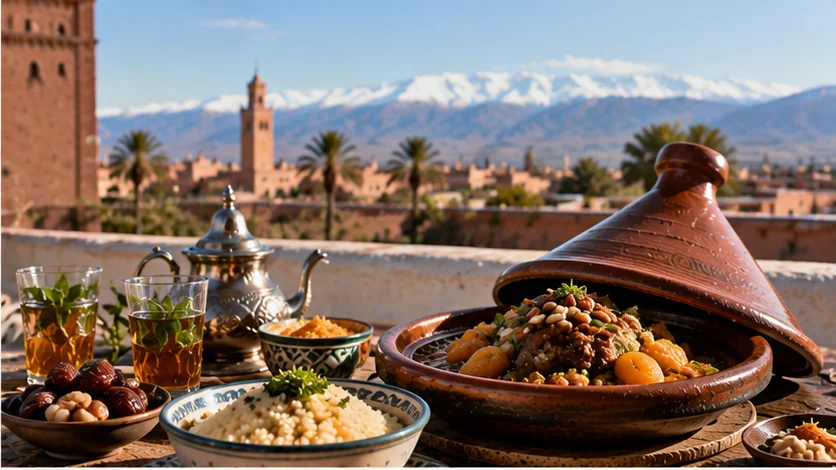
In winter Moroccan cooking seems to follow the day’s slower pace: patient simmering, carefully balanced spices and dishes made to share. In Marrakech, sitting down to eat can be an encounter with a culture shaped by inherited gestures and familiar ingredients.
Tagine takes its name from the earthenware vessel in which ingredients cook gently. Recipes change from family to family and region to region: meat, vegetables, olives, preserved citrus and spices appear in different combinations. There is no single definitive version.
Harira, a nourishing soup based on tomato, pulses and herbs in its many variations, is part of Moroccan conviviality throughout the year. Couscous is another important cultural reference, with meanings that extend well beyond a quick meal prepared for visitors.
Mint tea can mark a pause or a welcome. Everyday bread, dates and sweets carry a similar significance: small details through which hospitality is expressed without display.
For curious travellers, respectful conversations with a cook or an unhurried visit to a market often reveal more than an elaborate staged tasting. That is the kind of culinary luxury worth seeking.