 STRATEGIC HOSPITALITY & DESTINATION ADVISORY
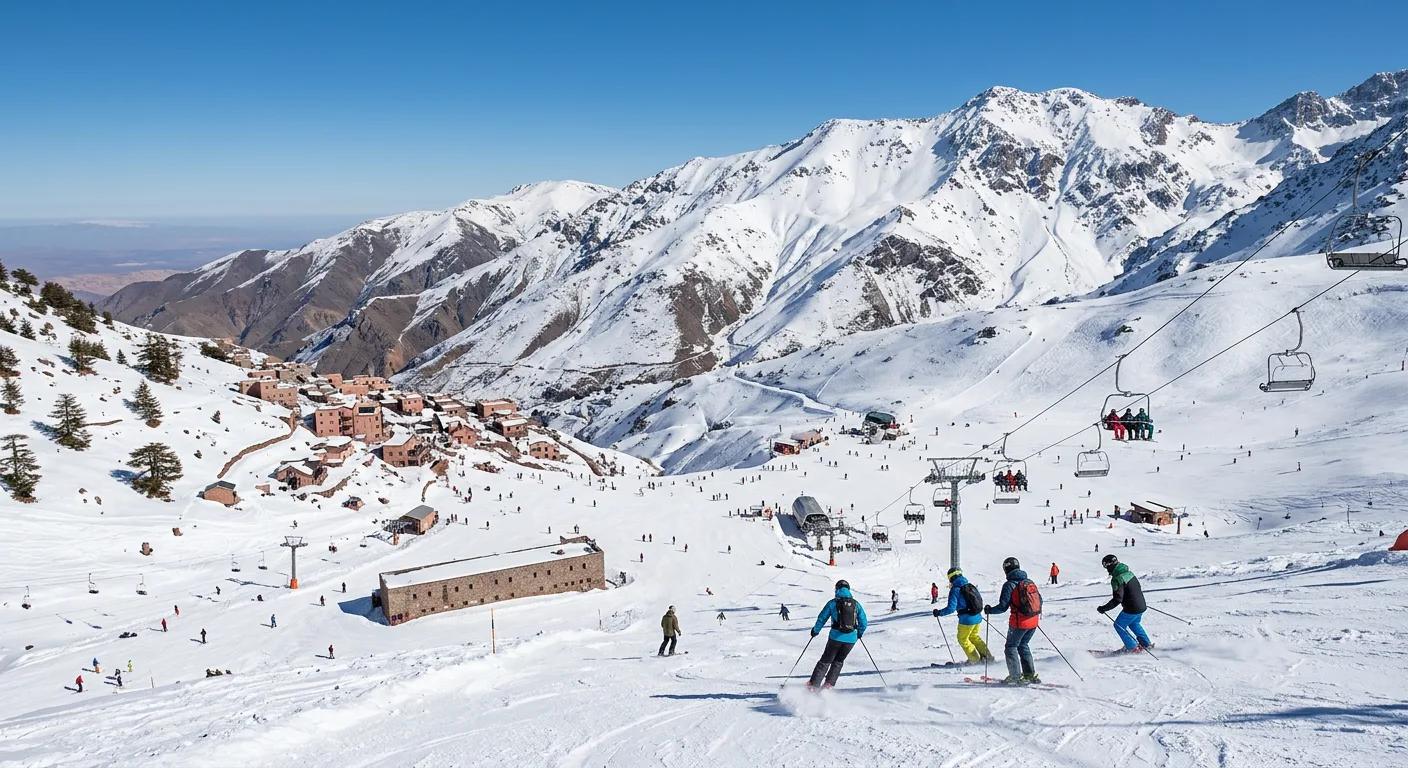
Morocco is often imagined through the colours of Marrakech, the architecture of its medinas and the silence of the desert. Yet a relatively short journey from the Red City reveals an entirely different landscape. The High Atlas Mountains rise towards rugged summits that can be covered in snow during winter. Here, Morocco offers one of its most unexpected experiences: skiing.
Oukaïmeden, approximately 75 kilometres from Marrakech, is the principal ski destination in Morocco's High Atlas. Set within a mountain environment reaching above 3,000 metres, it offers an experience unlike the major Alpine resorts. Its appeal lies not in extensive ski infrastructure or elaborate facilities, but in the remarkable contrast between North African landscapes and the atmosphere of a high-altitude winter.
Skiing in the Atlas requires a different mindset. Snowfall is not guaranteed, and conditions can vary considerably between seasons. This uncertainty calls for thoughtful planning, including checking snow cover, road access and lift operations before travelling. A carefully designed journey should remain rewarding even when skiing is not possible.
Beyond the slopes lies a region with a distinctive cultural identity. Mountain villages, Amazigh traditions and ways of life shaped by altitude reflect a complex relationship between local communities and their environment. For international travellers, the most meaningful encounters may come not from extraordinary activities, but from exploring these places with knowledgeable local guides and engaging with hospitality that respects its surroundings.
The proximity of Marrakech creates opportunities for itineraries combining city and mountains, architecture and nature, culinary culture and outdoor exploration. A high-end journey might bring together the intimacy of a riad, encounters with local craftsmanship and a day in the Atlas, without turning every moment into another scheduled attraction.
Sustainability is especially relevant in this environment. Where mountain snow contributes to regional water resources and ecological balances are sensitive, tourism development should consider water availability, transport, waste management and tangible economic benefits for resident communities. Scientific research highlights both the variability of the Atlas snowpack and its importance to regional hydrology.
The real luxury of a Moroccan winter is therefore not the possibility of recreating an Alpine holiday in a different setting. It is the opportunity to discover another mountain culture, understand its limitations and appreciate its distinctive character. In the High Atlas, even a day without skiing can become memorable when travel leaves room for knowledge, human connection and discovery.