 STRATEGIC HOSPITALITY & DESTINATION ADVISORY
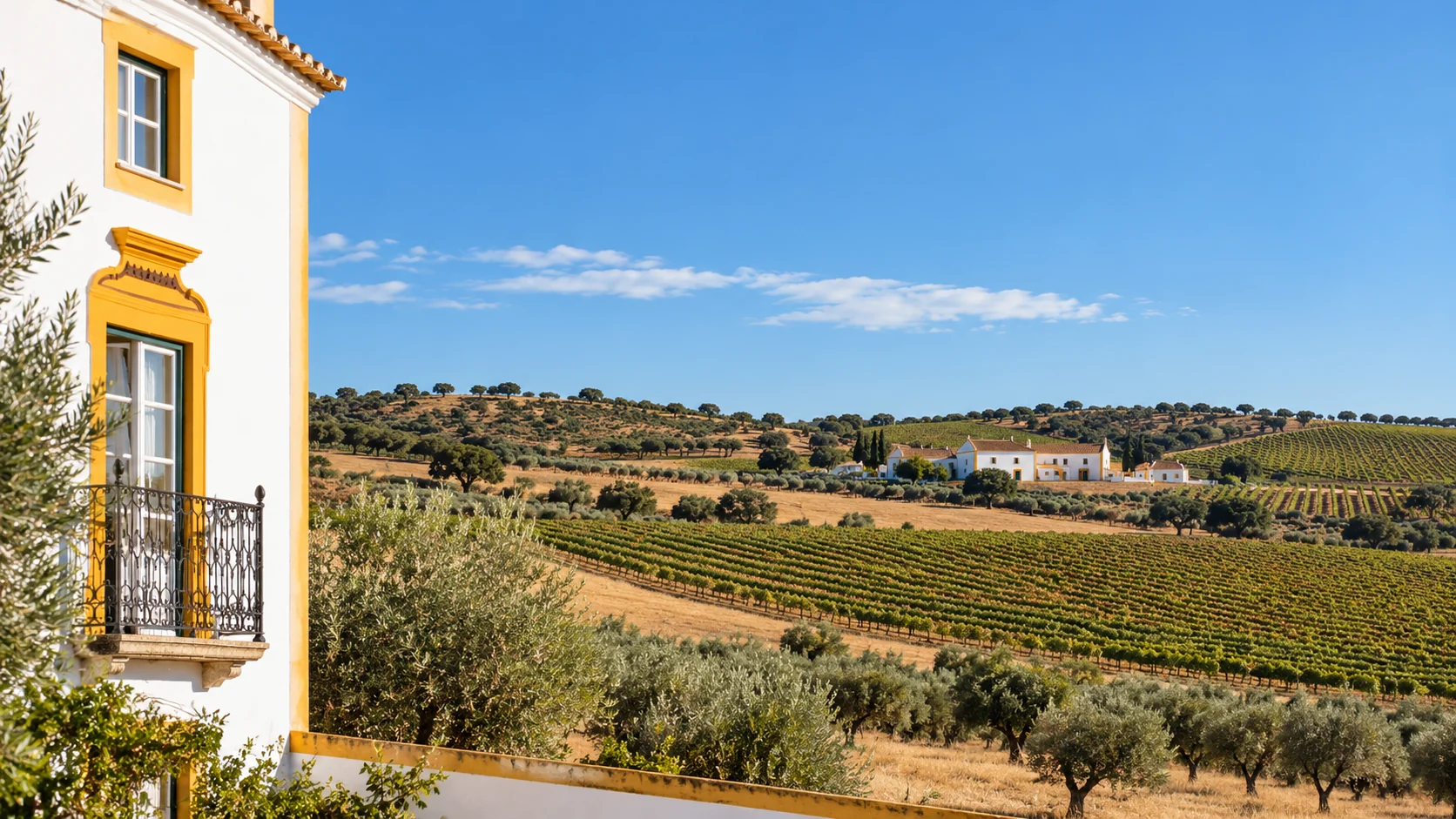
Some places become easier to understand as daylight fades. In Alentejo, southern Portugal, the distances unfold across hills, cultivated fields and small settlements. Whitewashed houses and solitary trees are more than a pleasing composition: they tell of a territory where farming, architecture and everyday life have learned to coexist with open space and distinct seasons. Here, a journey might begin with a simple question: what is worth leaving undisturbed?
Part of the answer lies in the montado, an agro-silvo-pastoral landscape of cork oaks and holm oaks, grazing land and crops. It is not untouched nature, separate from human activity, but a balance shaped and maintained over time. Understanding this system means looking beyond the finished product — cork, for example — to the skills, decisions and daily work that allow the landscape to endure. For travellers, the depth of an encounter also depends on a willingness to listen to those stories.
The cultural landscape has a distinctive voice: Cante Alentejano, a traditional form of polyphonic singing without instrumental accompaniment, inscribed in 2014 on UNESCO’s Representative List of the Intangible Cultural Heritage of Humanity. It is not simply background music to accompany dinner. It is a collective practice, passed between generations and rooted in community life. To approach it respectfully is to understand that a tradition does not exist primarily to entertain visitors; it belongs first to the people who sustain it.
Then night falls. Around Alqueva, the Dark Sky Alqueva initiative has earned Starlight Tourism Destination certification for the protection and appreciation of the night sky. Stargazing can therefore become an encounter with knowledge rather than spectacle alone. Yet the more compelling story is what makes it possible: reducing light pollution, respecting quiet and treating darkness as a shared resource. At a time when places are increasingly expected to remain illuminated and available around the clock, that choice carries particular meaning.
For boutique hospitality and eco-luxury, Alentejo suggests a different measure of comfort. Not adding activities indiscriminately, but selecting those that belong; not filling every hour, but leaving room for the landscape; not using sustainability as a decorative vocabulary, but expressing it through decisions that can be examined. Thoughtful outdoor lighting, fair relationships with producers and an accurate account of local traditions may matter more than conspicuous amenities. Sometimes the rarest privilege is simply to look up at a sky without interruption.